
Short-Term Rentals at the Delaware Beaches: Advantages and Disadvantages
Have you ever considered owning a short-term rental at the Delaware beaches?
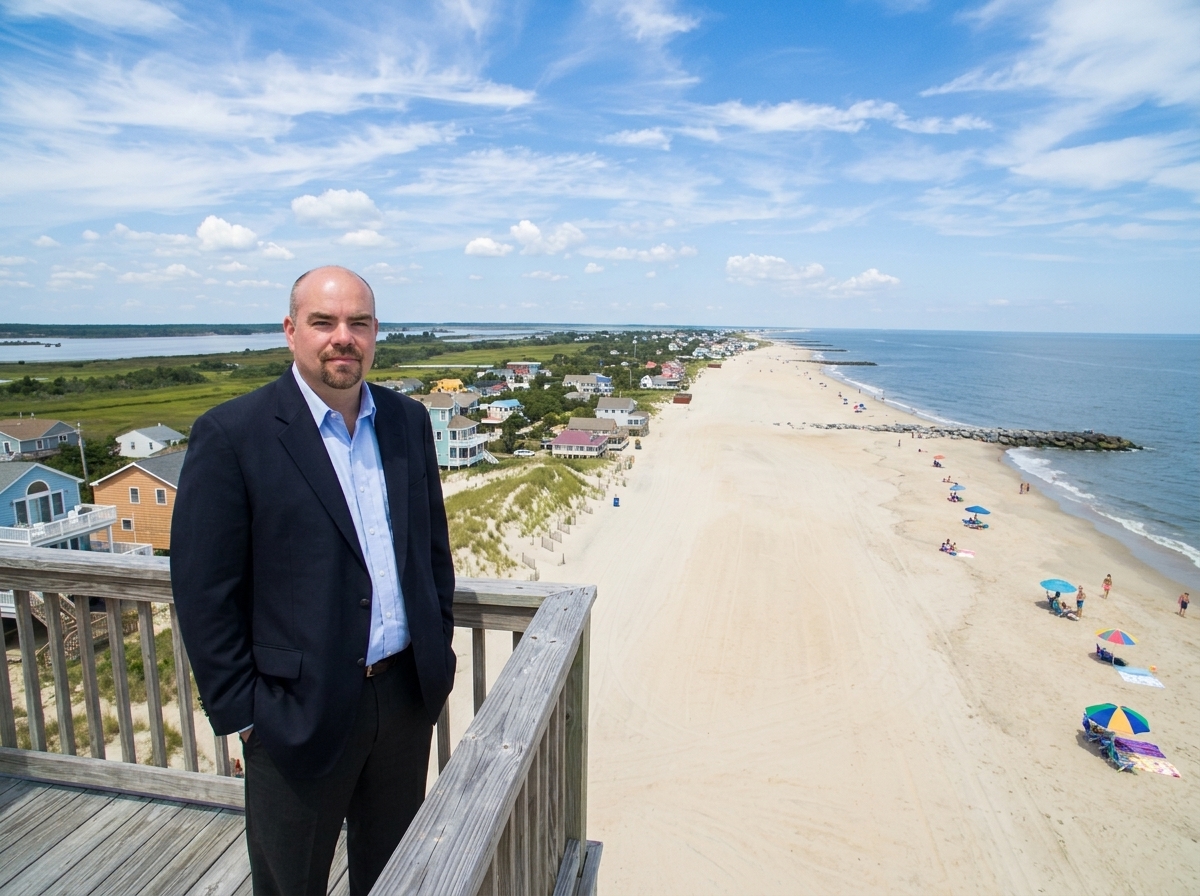
Here's what Jim Arcidiacono of Next Move Delaware Valley, a REALTOR® licensed in Delaware, Pennsylvania and Maryland who helps investors weigh returns, says about the six resort towns of coastal Sussex County.
I'll give you the short version first. A short-term rental at the Delaware beaches can earn excellent money in summer.
It also comes with a layered tax bill of 7.5% to 12% on every booking, a rental license in every town, and a revenue year that lives inside roughly 10 to 14 summer weeks.
Below I walk through six Sussex County resort towns: Lewes, Rehoboth Beach, Dewey Beach, Bethany Beach, Fenwick Island and Ocean View.
One big change to know about. Since January 1, 2025, Delaware taxes short-term rentals (stays of 31 nights or less) at a state rate of 4.5%, and each town adds its own rental tax on top. Rules and rates move often here, so please confirm every figure with the town before you rely on it.
Why I like the Delaware beaches for short-term rentals
For me, the case starts with location: a huge drive-to market, premium summer rates, and some of the lowest carrying taxes on the East Coast.
Demand and location
- A drive-to market. The beach towns sit within about a three-hour drive of more than 30 million people in the Northeast corridor: Washington, Baltimore, Philadelphia and the New York area. Most guests arrive by car, so your bookings don't depend on airfares.
- Big visitor numbers. Rehoboth, Lewes and Bethany draw an estimated 5 million or more summer visitors a year.
- Premium peak rates. Average daily rates run roughly $410 to $530 a night in the main towns: Dewey about $530, Bethany about $455, Fenwick about $527. The Delaware average is about $342.
- Groups and families. Families and friend groups often prefer a house to several hotel rooms, and towns like Dewey have little hotel stock. That keeps rental demand high.
Every town draws a different guest
That lets you pick your niche:
- Lewes: a historic town with Cape Henlopen State Park, the ferry to Cape May, and the most year-round activity.
- Rehoboth Beach: boardwalk, restaurants, nightlife, an LGBTQ+-friendly resort scene, arts and festivals.
- Dewey Beach: a younger crowd, bars and nightlife, bay sunsets.
- Bethany Beach and Fenwick Island: the quieter, family-oriented "Quiet Resorts."
- Ocean View: about a mile inland, with lower purchase prices and a short drive to Bethany.
What guests come for
- Tax-free shopping. Delaware has no state or local sales tax. That pulls shoppers to the outlets and boardwalk shops, and it's worth a line in your listing.
- Plenty to do. Boardwalks in Rehoboth and Bethany, Cape Henlopen and Delaware Seashore state parks, bike trails, kayaking and fishing on the inland bays, a large restaurant scene, and Beebe Healthcare nearby.
- Wide beaches. Ongoing beach nourishment keeps the ocean beaches wide in the main towns, which protects the core attraction.
Weather and season
- Warm, reliable summers. Highs typically sit in the 80s °F with ocean breezes. Beach weeks run from mid-June to Labor Day.
- Growing shoulder seasons. Mild Mays, Septembers and Octobers bring festivals (Sea Witch, the Rehoboth jazz and film festivals) and weekend bookings outside summer.
Taxes and costs that favor owners
- Very low property taxes. Sussex County's effective property tax rate is about 0.33%, roughly a third of the national average of about 0.91%.
- No sales tax and no personal property tax. Furnishings, appliances and supplies for the rental cost less than in neighboring states.
- Guests pay the lodging taxes. State and town rental taxes are added to the guest's bill, and booking platforms collect the 4.5% state tax.
- Federal deductions. Mortgage interest, depreciation, management, cleaning and repairs are generally deductible against rental income. Confirm the details with your tax adviser.
Investment and personal use
- Your own beach weeks. You can block off weeks for your own vacations, which a year-round lease doesn't allow.
- Long-run appreciation. Coastal Sussex remains one of the fastest-growing areas in the Mid-Atlantic, driven by retirees and second-home buyers.
- A flexible exit. A beach home can become a long-term rental, a primary residence or a retirement home.
What you need to plan for
The biggest drawbacks are a short earning season, rising taxes and rules, and real storm and flood exposure that pushes up insurance.
Seasonality
- Income is concentrated in summer. In Bethany, August listings average about $20,258 in revenue, while winter months fall below $1,400.
- Low year-round occupancy. Annual occupancy runs only about 37% to 42% in Dewey, Rehoboth and Lewes, so the property sits empty most nights outside summer.
- Fixed costs run all year. Mortgage, insurance, utilities, HOA dues and maintenance continue through the empty winter months.
Want a longer season? Theresa Pavone breaks down Hilton Head Island, where warm weather and swimmable water run from spring into October.
Weather and environmental risk
- Hurricanes and nor'easters. Coastal Sussex is exposed to Atlantic hurricanes, winter nor'easters and storm surge. Hurricane Sandy flooded parts of Rehoboth Bay and Indian River Bay.
- Flooding and sea level rise. Delaware is the lowest-lying state in the country. Relative sea level has risen about 13 inches in the past century, with 1.5 to 4.5 more feet projected by 2100. Sunny-day tidal flooding is already common in low areas such as Dewey's bayside.
- A bad-weather summer hurts. A rainy spring or a storm in a peak week means cancellations and refunds. Rehoboth reported lower-than-expected parking revenue after poor spring weather in 2025.
- Salt air and sand. Coastal homes need painting, HVAC and appliance replacement more often than inland homes.
Insurance
- Higher premiums near the water. Coastal Sussex carries meaningfully higher homeowners rates than the rest of Delaware because of wind and surge exposure.
- Flood coverage gaps. Oceanfront areas of Rehoboth, Dewey, Bethany and Fenwick are in FEMA's highest-risk VE zone. Federal flood insurance caps dwelling coverage at $250,000, so most beach homes need costly private excess flood coverage.
- A policy written for rentals. Standard homeowners policies often exclude business use, so you'll need a short-term rental or landlord policy with liability coverage.
Taxes and fees
- The state STR tax. Since January 1, 2025, Delaware charges 4.5% on short-term rentals, on top of each town's tax.
- High combined rates. Total taxes on a booking now run from 7.5% (Dewey) to 12% (Fenwick Island). That raises the guest's total price and can make your listing less competitive.
- Fees stack up. One sample Rehoboth booking listed at about $3,995 came to $4,884.80 after processing, damage-waiver and linen fees plus state and local taxes: almost $890 over the list price.
- Costly to buy or sell. Delaware's realty transfer tax is 4%, among the highest in the nation, usually split between buyer and seller.
- Property tax changes. Sussex County's 2024–2025 reassessment, the first in decades, is shifting tax bills for many owners.
- Paperwork. Each town has its own gross-receipts return schedule (Rehoboth annually by February 15, Dewey monthly, Fenwick seasonally), plus state and federal income tax on net rental income.
Regulation
- A license in every town. All six towns require an annual rental license, and several post stickers, require a 24-hour local contact, or allow inspections.
- Fines and revocation. Lewes can revoke a license after repeated violations, and Dewey fines $500 for an unposted license.
- Rules keep changing. Towns revisit fees and tax rates often (Rehoboth was weighing new fees for fiscal 2027), and HOAs or condo boards may restrict or ban short stays.
- Occupancy and noise limits. Occupancy caps tied to bedrooms, parking limits and noise ordinances restrict large groups.
Market and operations
- High purchase prices. Beach-area homes cost far more than the county median, so returns on price can be thin. Rabbu rates Bethany's revenue-to-price ratio below average.
- Competition. Rehoboth alone has about 950 active listings and Lewes about 1,000. New supply has compressed occupancy even as rates rise 3% to 5% a year.
- Management costs. Local managers typically charge 10% to 25% or more of revenue, and Saturday turnover cleanings in peak season are expensive and hard to staff.
- Traffic and parking. Route 1 summer traffic and paid parking in Rehoboth, Dewey and Lewes are common guest complaints.
- Community pushback. Residents and officials cite short-term rentals as a cause of tighter workforce housing and neighborhood noise, which fuels more regulation.
Town by town
Dewey has the lightest tax load at 7.5% combined. Fenwick Island has the heaviest at 12%.
| Town | Town rental tax | Combined with 4.5% state | Annual rental license | Character |
|---|---|---|---|---|
| Fenwick Island | 7.5% (cut from 8% on Jan 1, 2026) | 12% | $185 per calendar year, $100 late fee | Small, quiet family town; very few listings (about 9 on Airbnb) but rates near $527 a night |
| Rehoboth Beach | 7% | 11.5% | About $150 (third-party figure; confirm with the city) | Largest STR market (about 950 listings); boardwalk, dining, nightlife; most competition |
| Bethany Beach | 7% of gross receipts | 11.5% | $100 per unit, June 1–May 31 | Family "Quiet Resort"; strong summer, weak winter |
| Lewes | 5% | 9.5% | $200 per unit; local contact required; revocation after repeat violations | Historic town, state park, ferry; most year-round demand; about 1,000 listings |
| Ocean View | 5% of gross rental receipts (a 6% town form also appears; confirm) | 9.5% | $150 per calendar year | Inland, lower prices, short drive to Bethany; quieter |
| Dewey Beach | 3% accommodations tax | 7.5% | Starts about $142 and rises by bedroom count (2022 figure); sticker must be posted | Nightlife town with a younger crowd; about 225 listings; occupancy near 38% |
Unincorporated areas outside these towns (North Bethany, for example) pay a 3% Sussex County tax instead, for 7.5% combined.
How the taxes work on a real booking
Here's a simple example. A 4-night, $300-a-night stay in Rehoboth ($1,200 in rent) carries $138 in lodging taxes: $54 to the state (4.5%) plus $84 to the city (7%). The guest pays $1,338.
- State STR lodging tax: 4.5%. It applies to stays of 31 consecutive nights or fewer, booked on or after January 1, 2025. That's lower than the 8% state rate on hotels, motels and tourist homes.
- Who collects it. Booking platforms such as Airbnb and Vrbo collect and remit the state tax as licensed "accommodations intermediaries." If you rent directly, you register and remit it yourself.
- Town taxes. Usually paid by the owner on gross rental receipts, on each town's schedule. Fenwick, for example, adds a 25% penalty on late tax.
- County tax. 3%, in unincorporated Sussex County only.
- Income tax. Net rental income is subject to Delaware income tax (2.2% to 6.6%) and federal income tax, after deductions.
- Property tax. About 0.33% effective in Sussex County, among the lowest in the US.
- Realty transfer tax. 4% of the purchase price, usually split between buyer and seller. On a $1 million beach house, that's $40,000.
- No sales tax. None on furnishings, supplies or guest purchases.
My bottom line
A Delaware beach rental can earn strong summer income on low carrying taxes. Whether it makes money comes down to three things: buying at a sensible price, budgeting for twelve months of costs and flood insurance, and keeping up with the town licensing and tax rules that changed in 2025 and 2026.
If you want more year-round demand or a lower-cost way in, look at Lewes and Ocean View. Rehoboth is the biggest market and the most competitive. Dewey has the lightest tax load. Bethany and Fenwick suit family-focused, summer-heavy rentals.
Weighing Delaware against a Southern beach market? Our side-by-side with Hilton Head Island puts the two next to each other.
A note on the numbers
Figures as of November 2026. Market figures (rates, occupancy, revenue) come from private data firms and vary widely by source, so treat them as estimates. Tax rates, license fees and rules change often; confirm them with each town before you rely on them. Nothing here is tax or legal advice.
Sources
- Spotlight Delaware: Sussex short-term rental tax
- Delaware Public Media: New state tax and the beach rental market
- Delaware Division of Revenue: Short-term rental FAQs
- Sussex County short-term rental lodging tax ordinance
- City of Rehoboth Beach: Lodging and rental taxes
- City of Lewes: Rental FAQ and Lewes code §150
- Town of Dewey Beach: Rental license application
- Town of Bethany Beach: Licenses and rental tax
- Town of Fenwick Island: 2026 tax change and rental license form
- Town of Ocean View: Rental licenses
- Coast TV: Fenwick equalizes lodging taxes
- Roommaster: Delaware lodging tax
- AirROI: Delaware Airbnb data
- Rabbu: Bethany Beach and Fenwick Island
- AirDNA: Lewes supply
- AskDoss: Delaware coastal flood zones 2026
- InsuranceQuotes: Delaware home insurance
- Delaware Live: Realty transfer tax
- taxbycounty.com: Sussex County property tax

Jim Arcidiacono
Real Estate Advisor · Next Move Delaware Valley
Jim Arcidiacono, REALTOR® | Founder of Next Move Delaware Valley Jim Arcidiacono is a trusted real estate advisor and founder of Next Move Delaware Valley, helping buyers, sellers, investors, and relocation clients across Pennsylvania, Delaware, and Maryland. Licensed in all three states, Jim specializes in Delaware Valley real estate, Philadelphia suburbs homes, Chester County luxury homes, and New Castle County Delaware properties. His approach combines local market expertise, strategic marketing, and strong negotiation to help clients move with confidence. Jim is a proud member of KW Luxury, assisting clients with the sale and purchase of luxury homes through elevated marketing, targeted exposure, and tailored strategies designed for high-end properties. He is also part of KW Rental Investments, helping investor clients identify opportunities, evaluate returns, and build long-term wealth through real estate. As a member of KW Sports & Entertainment (KWSE), Jim works with athletes, coaches, and sports professionals who need trusted real estate guidance and discretion. Through Next Move X, a nationwide relocation network, he also helps clients seamlessly move anywhere in the United States. Known for a relationship-first approach and deep knowledge of the Delaware Valley housing market, Jim supports everyone from first-time homebuyers and growing families to luxury sellers and real estate investors. When working with Jim, clients gain a knowledgeable advisor committed to help
Not sure which strategy fits?
Take the investor quiz and get pointed toward the rental strategy that matches your goals — then talk it through with a KW agent who invests for a living.