
Are Airbnb Income Calculators Accurate? Myths and Realities
You find a potential investment property. You type the address into a free online calculator. A number pops up instantly.
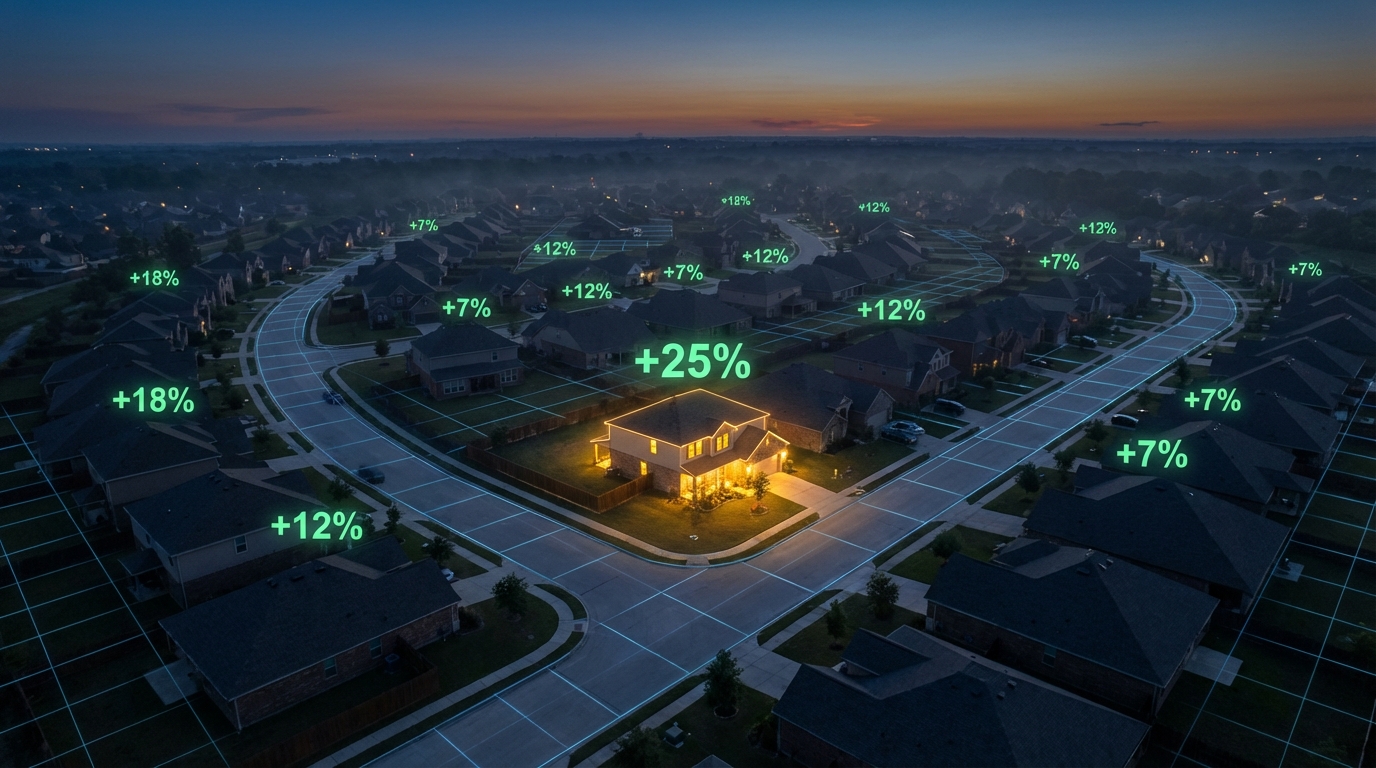
You find a potential investment property. You type the address into a free online calculator. A number pops up instantly.
It looks authoritative. It promises a specific annual return. You feel a rush of excitement because the math seems to work. You start picturing the cash flow.
Stop right there.
That number is likely wrong. Relying on it without verifying the data behind it puts your entire investment at risk. I have spent years analyzing how these systems work. I dig into the code and the data sources. The truth is often messy.
We prioritize “Data Over Guesswork.” Algorithms are powerful tools. They process information faster than any human can. But they lack context. They do not know if a house is empty because nobody wants it or because the owner is staying there for the summer.
Real estate requires precision. A mistake in your projections impacts your bank account. You need to understand the mechanics behind the screen to separate the signal from the noise.
The Mechanics: How the “Brain” Actually Works
Most people treat income calculators like magic boxes. You put an address in, and an answer comes out.
These tools use machine learning. Imagine a super-smart student preparing for a history test. This student reads every history book available. Based on what happened in the past, the student guesses what will happen in the future.
That is what the algorithm does. It studies historical performance. It looks at the Average Daily Rate (ADR) of similar homes nearby. It checks how often those homes were booked (Occupancy Rate). It assumes the future will look roughly like the past.
Modern tools go a step further. They look for demand signals. They track flight bookings to your city. They scan event calendars for big concerts or conferences. Forecast STR Revenue with Data highlights how platforms weight these factors, often prioritizing historical data while trying to account for seasonality.
This method works well for averages. It identifies broad trends in a neighborhood. But you do not buy averages. You buy a specific house with specific quirks. That is where the math starts to break down.
The Myth of Accuracy: The 20% Gap
Platform marketing often claims extremely high accuracy rates. You might see claims of 96% or 97% accuracy. These numbers refer to the platform’s ability to predict revenue for an entire market or city.
When you zoom in to a single property, the reality changes.
My research into income calculator accuracy reveals a significant drop in precision at the listing level. For an individual house, the error margin often swings by 20%.
This happens because of “scraped data.” The algorithm looks at public calendars on sites like Airbnb or Vrbo. It sees a date that is blocked off. It assumes a guest booked that date and paid for it.
This is a massive assumption.
Owners block dates for many reasons. They might stay there themselves. They might let friends use the place for free. They might block dates for maintenance. The computer counts these days as revenue.
This creates a “false positive.” The calculator tells you the property is making money. In reality, it is sitting empty or occupied by non-paying guests.
Airbtics Data Accuracy confirms this discrepancy. Their data shows that while market-wide stats hold up, individual listing estimates suffer from these blind spots.
If you base your purchase on these inflated numbers, you buy a liability. You expect cash flow that simply does not exist.
This is one of several pitfalls investors face. For a deeper dive into these errors, read about the 5 Common Mistakes When Using Airbnb Income Calculators. Understanding these traps protects your capital.
The Revenue Inflation: The Cleaning Fee Illusion
There is another hidden error in generic rental data that inflates your projected income.
Standard calculators often lump cleaning fees into total revenue.
Here is the scenario. A guest pays $200 a night for three nights. They also pay a $150 cleaning fee. The platform records the total transaction value. The algorithm sees this revenue and adds it to your projected income.
But that $150 is not income. It goes directly to the cleaning crew. You never keep it.
If a property has high turnover, these fees add up fast. A calculator might show you making an extra $10,000 a year. But that $10,000 is an expense pass-through, not profit.
We designed Rental Forecast® to solve this specific problem. Our tool explicitly excludes cleaning fees from revenue projections.
This distinction matters. You need to know what lands in your pocket. Real estate projections must reflect owner benefit, not just gross transaction volume.
When you remove the cleaning fee illusion, the return on investment often looks very different. A deal that seemed like a home run might actually be a base hit or a strikeout. You need the real numbers to decide.
The High Stakes of 2026: Why Precision is Non-Negotiable
The economic landscape has shifted. The strategies that worked five years ago do not work today.
We are looking at the Realtor.com 2026 Housing Forecast. The data points to a tougher environment. Mortgage rates are likely to hover around 6.3%. Housing inventory is climbing, reaching roughly 4.6 months of supply.
This means two things. First, borrowing money is expensive. Second, tenants and guests have more options.
Competition is rising in popular Sun Belt markets like Raleigh and Nashville. You are not just competing with other investors; you are competing for a smaller share of the guest pool.
In a market with 3% interest rates, you could afford to be wrong. A 20% error in your income projection was annoying, but not fatal. The cheap debt covered your mistakes.
With rates over 6%, margins are thin. A 20% drop in actual revenue turns a profitable asset into a monthly bill.
Data validity is now a survival requirement. You cannot guess. You must know exactly what the property will produce. The margin for error has disappeared.
From Guesswork to Strategy: The DSCR Solution
Successful investors in this cycle move from a “passive host” mindset to a “strategic investor” mindset.
You need to validate the asset’s ability to pay for itself. We use the Debt Service Coverage Ratio (DSCR).
This metric asks a simple question: Does the rental income cover the debt?
Lenders use this ratio to qualify you for loans. They care less about your personal tax returns and more about the property’s performance.
To get the best financing, you need ironclad data. You can learn more about the current lending environment in our post on How to Finance Your Short-Term Rental Property in 2025.
Generic screenshots from free websites do not convince underwriters. They know the data is scraped. They know about the errors.
This is where we utilize Strategic Investment Financing & Advisory. We help investors access high-leverage DSCR loans.
To secure these loans, we provide lenders with white-labeled reports generated by Rental Forecast®. These reports allow us to clean the data. We strip out the owner blocks. We remove the cleaning fees. We present a verified picture of the asset’s potential.
This proves the math to the lender. It shows that you are a professional who understands short term rental myths and avoids them. It turns a risky bet into a calculated business decision.
Conclusion: The Unfair Advantage
Calculators are not crystal balls. They are starting points.
Most people stop at the starting point. They see the number, they buy the house, and they hope for the best. That strategy fails in the current market.
You have the opportunity to dig deeper. You treat the calculator as a rough draft. You verify the inputs. You strip out the noise.
Do not just browse Zillow. Build a strategy.
Use the resources available to you.
- Use Rental Forecast® to run the actual analysis and remove false data.
- Check the Video Vault for expert training on how to read these signals.
- Consult the Rental Essentials List to ensure your furnishings justify the ADR you are projecting.
The market rewards precision. The tools are in your hands. Use them.
Not sure which strategy fits?
Take the investor quiz and get pointed toward the rental strategy that matches your goals — then talk it through with a KW agent who invests for a living.